
Ranked among Top Schools Of Uttarakhand
(Day & Residential)
Choosing a boarding school means choosing much more than a curriculum. For most of the year, the school becomes the place where a child studies, eats, sleeps, plays, makes friends and learns to handle everyday responsibilities.
That makes the residential side of schooling just as important as academic results.
For parents comparing top co ed boarding schools in India, useful questions go beyond board results and campus photographs. Who supervises students after classes? How are the boys’ and girls’ residential areas managed? What happens when a child falls sick at night? How much time is given to sports, recreation and independent study? And what exactly is included in the boarding fee?
A co-educational boarding school brings boys and girls together for academic lessons and many campus activities while maintaining separate residential arrangements. For children, this creates an environment where interaction with the opposite gender becomes part of ordinary school life rather than something unfamiliar.
The right school, however, depends on the child. A student who enjoys competitive sports may look for something very different from a child who prefers performing arts, a smaller campus or an international curriculum.
This guide looks at 10 residential schools through that practical lens.
There is no universal formula for deciding which residential school will work for every family. Instead of treating the schools as a numbered ranking, this guide considers the features that can materially affect a child’s boarding experience.
The comparison looks at:
That distinction matters because boarding-school selection is highly personal. Location, curriculum, age of entry, budget and a child’s temperament can change the suitability of a school considerably.
| School | Location | Academic Board / Curriculum | Boarding Arrangement | What Parents Can Compare |
| Doon International School | Dehradun, Uttarakhand | CBSE | Full boarding | Residential routine, sports facilities and evening study support |
| The Lawrence School, Sanawar | Sanawar, Himachal Pradesh | CBSE | Full boarding | House system, outdoor activities and hill-campus living |
| JAIN International Residential School | Bengaluru, Karnataka | CBSE / IB / Cambridge | Full boarding | Curriculum pathways, sports facilities and residential amenities |
| Pinegrove School | Solan, Himachal Pradesh | CBSE | Full boarding | Junior and senior campuses, class sizes and residential care |
| The Asian School | Dehradun, Uttarakhand | CBSE | Full and day-boarding | Academic routine, sports and co-curricular activities |
| Delhi Public School RK Puram | New Delhi | CBSE | Day-cum-boarding for senior students | Senior-school academics, board examinations and entrance preparation |
| Kasiga School | Dehradun, Uttarakhand | CBSE / CAIE | Full boarding | Curriculum pathways, design and technology facilities |
| Miles Bronson Residential School | Guwahati, Assam | CBSE | Full boarding | Technology resources, robotics and pastoral care |
| Sherwood College | Nainital, Uttarakhand | ICSE / ISC | Full boarding | House life, performing arts and outdoor activities |
| Kodaikanal International School | Kodaikanal, Tamil Nadu | IB Continuum | Full boarding from Grade 5 | IB education, international community and outdoor programmes |
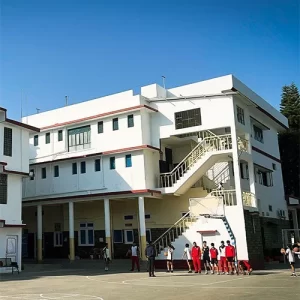
Doon International School‘s City Campus is situated at Pari Mahal, 32 Curzon Road, Dalanwala. The school has been operating since 1993 and offers CBSE education from Nursery to Class XII, along with day and boarding facilities.
The campus covers about 8,790 square metres. Students have access to academic buildings, residential accommodation and sports facilities, all within the city of Dehradun.
According to the CBSE SARAS record, the school has affiliation number 3530069 and School Code 81093. The affiliation is currently shown as valid up to 31 March 2030.
For children staying on campus, the residential facilities are arranged in separate boys’ and girls’ hostels. Resident wardens are responsible for supervision. The boarding routine includes school hours as well as time for study, meals, recreation and rest.
Families considering the boarding option may find it useful to visit the hostel before admission. This gives parents an opportunity to see the rooms and common areas and ask the school about supervision, study periods, meals and medical arrangements.
Quick facts
| Detail | Information |
| Location | Pari Mahal, 32 Curzon Road, Dalanwala, Dehradun, Uttarakhand |
| Curriculum | CBSE |
| Classes | Nursery to Class XII |
| Boarding | Co-educational, with separate boys’ and girls’ hostels |
| Established | 1993 |
| CBSE affiliation number | 3530069 |
| Affiliation valid until | 31 March 2030 |
2026–27 boarding fees
For the 2026–27 session, the listed charges are:
Before applying: Visit the hostel and ask about wardens, evening study arrangements, medical support, meals and the expenses covered through the imprest account.
 2. The Lawrence School, Sanawar
Focus: A long-established house system and residential life in the hills
Founded in 1847, The Lawrence School, Sanawar is one of India’s historic residential schools. Its setting in the Himachal hills is an important part of the experience, particularly for children who enjoy outdoor activities and a traditional campus environment.
The school’s house system forms a significant part of residential life. Students live within a structured community where daily routines, activities and responsibilities extend beyond classroom hours.
Its CBSE curriculum sits alongside sports, physical activities and other aspects of residential schooling.
Quick facts
Before applying: Ask about winter conditions, clothing requirements, medical arrangements and how younger students are supported during their first term away from home.
Focus: Multiple academic pathways and extensive sports facilities
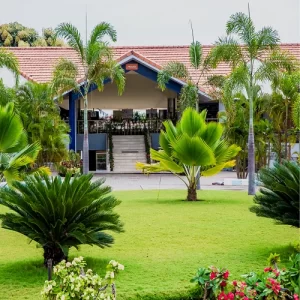
JAIN International Residential School, or JIRS, offers a large residential campus near Bengaluru. Its academic offering includes CBSE, IB and Cambridge pathways, giving families several curriculum options within one institution.
The school describes its campus as extending across more than 350 acres and offers a broad sports programme. Its published material also identifies the institution as a co-educational residential school serving students from India and overseas.
This combination may appeal to families who want residential schooling but are still deciding between a national and international curriculum.
Quick facts
Before applying: Ask whether changing curriculum streams later is possible and what academic requirements apply to each pathway.
 4. Pinegrove School, Solan
Focus: A smaller-school environment and structured residential life
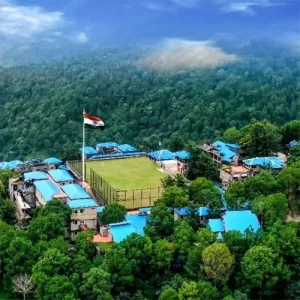
Pinegrove School operates in the hill region of Himachal Pradesh and is known for its co-educational residential model and separate campuses serving different age groups.
The difference between junior campus and senior campus becomes especially important for parents of young children. The change to boarding will be quite drastic and therefore the type of supervision that the young kids get needs to be considered.
The school follows the CBSE curriculum and combines academics with sports, creative activities and outdoor experiences.
Quick facts
Before applying: Ask how students move from the junior campus to the senior campus and how residential responsibilities change as they get older.
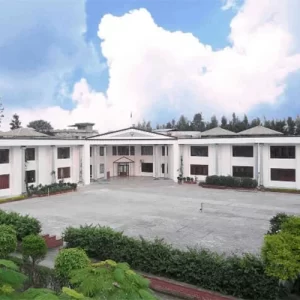
Focus: CBSE academics alongside sports and co-curricular activities
The Asian School in Dehradun is a co-educational school that offers students the option of boarding along with CBSE education.
Boys and girls have separate accommodation, while they share the classrooms and activity areas on campus.
For parents, the important thing to consider is not just whether the school provides hostel facilities, but how the boarding schedule fits around classes, sports, clubs and students’ personal time.
Quick facts
Before applying: Ask how much supervised study time is provided and whether teaching staff are available during those hours.
 6. Delhi Public School RK Puram, New Delhi
Focus: Senior secondary education and competitive examinations
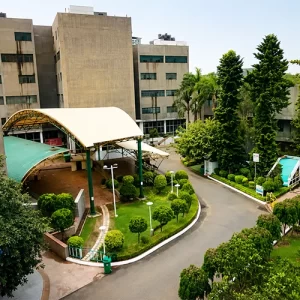
Delhi Public School RK Puram has a day-cum-boarding arrangement, with hostel accommodation intended mainly for students in Classes XI and XII. The school’s 2026–27 admission information mentions limited hostel availability for these senior classes.
Students can also access preparation support for examinations including JEE, NEET, CUET and CLAT. This makes the residential option different from schools where children may enter boarding much earlier in their schooling.
At a glance
Parents should check the hostel seat position before applying, along with the eligibility requirements, admission process and rules governing weekend leave.
Focus: Curriculum choice, technology and creative learning
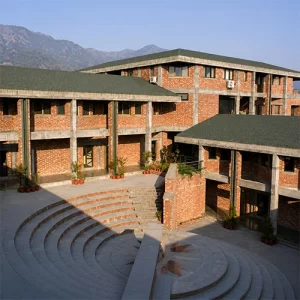
Kasiga School provides a residential setting in Dehradun with academic options that include CBSE and Cambridge pathways.
For families comparing curricula, the transition point between programmes deserves particular attention. Students should understand the differences in assessment, subject structure and project work before selecting a pathway.
The school’s campus combines academic facilities with residential accommodation, sports and creative learning spaces.
Quick facts
Before applying: Ask the admissions team to explain the academic differences between the CBSE and Cambridge routes rather than choosing solely on the basis of the board name.
 8. Miles Bronson Residential School, Guwahati
Focus: Residential education with technology and pastoral support
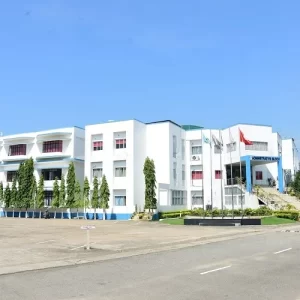
Miles Bronson Residential School provides co-educational residential schooling in Guwahati.
For families based in Northeast India, geographical accessibility can be an important consideration. The school combines academics with residential facilities, technology-focused learning and sports activities.
Parents considering the school should pay particular attention to how pastoral care works in practice. At a residential school, the adults responsible for students outside classroom hours can have a significant influence on the child’s experience.
Quick facts
Before applying: Ask who students approach when they have an academic, personal or health-related concern outside class hours.
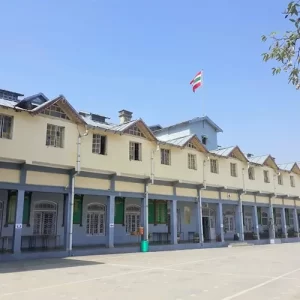
Focus: Performing arts, house life and a historic hill-school setting
Sherwood College in Nainital offers a residential experience shaped by its hill-campus setting and long institutional history.
Its academic programme follows the ICSE/ISC pathway, while drama, music, public speaking and outdoor activities form part of campus life.
The house system is another important feature for parents to investigate. In a residential school, the house becomes a child’s immediate community, so families should understand how students are grouped and how staff supervise them.
Quick facts
Aspects to be compared: House system, arts, and outdoor activities
Before applying: Find out how academic guidance is provided in board examination years and how residential facilities are adjusted during winters.
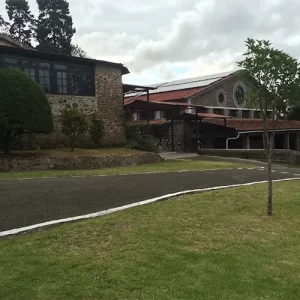 10. Kodaikanal International School, Kodaikanal
Focus: IB education and an international residential community
Kodaikanal International School offers the International Baccalaureate continuum and provides a residential environment in the hills of Tamil Nadu.
The school’s international orientation makes it different from schools that primarily follow Indian national curricula. Families considering an IB pathway should therefore examine not only the curriculum itself but also the child’s ability to adapt to its style of learning and assessment.
Outdoor education, community involvement and environmental programmes are also part of the school’s wider residential experience.
Quick facts
Before applying: Ask what academic and pastoral support is available to students entering the IB system from another curriculum.
Read Our Blog: Top 10 CBSE Boarding Schools in India to Consider in 2026–2027
A long list of facilities does not necessarily tell you how a boarding school will feel to a child. Instead, compare the systems behind those facilities.
Ask who is physically present in the hostel after classes. A school may have excellent infrastructure, but parents still need to know who handles routine issues once teachers leave the classroom.
Find out whether study periods are supervised and whether students can approach teachers for academic help.
Do not stop at the word infirmary. Ask about overnight nursing, emergency transport, nearby hospitals and the process for informing parents.
Check how access to boys’ and girls’ residential areas is controlled. Ask about visitors, entry records and supervision of common areas.
Boarding students eat most of their meals on campus. Parents should therefore ask about menu rotation, food hygiene, allergies, dietary restrictions and how students’ feedback is handled.
Phone restrictions differ significantly between schools. Find out when students can call home, whether video calls are allowed and how the school handles homesickness.
A child’s residential experience is not limited to Monday through Friday. Ask what happens on weekends. Sports, clubs, outings and supervised recreation can make a substantial difference to campus life.
Instead of asking only, “What facilities do you have?”, ask questions that reveal how those facilities are used.
Who looks after students after classes?
Ask which staff members are responsible for boarders during study, meals, recreation and bedtime.
What happens if a child becomes ill at night?
Find out who is on duty, where the child is taken and how quickly parents are contacted.
How does the school manage phones?
Ask about storage, calling hours, video calls and device restrictions.
What does a Sunday look like?
Request a sample weekend schedule. This can tell you a great deal about how much structure students actually have.
How are disciplinary issues handled?
Ask to see the relevant section of the student or hostel handbook. Clear procedures are more useful than general assurances.
You do not need to spend your entire visit inspecting classrooms. Set aside a few minutes for the residential areas.
Observe corridors, common rooms, dining areas and noticeboards. These ordinary spaces often tell you more about daily life than a formal presentation.
Speak to a current boarder if the school permits it. A simple question such as “Who do you go to if you feel unwell at night?” can reveal how familiar students are with the support system.
Follow the route students take between classrooms, dining areas and residential blocks. Notice how movement between these spaces is controlled.
If permitted, inspect washrooms, study areas and laundry arrangements. These are parts of boarding life that brochures rarely highlight.
The advertised tuition figure is rarely the only expense a boarding family needs to budget for.
When comparing good boarding schools in India, separate the costs into categories.
These may include registration, admission and refundable security deposits.
This generally forms the largest part of the school bill and may cover teaching, accommodation and meals.
Some schools maintain an advance balance for student-related expenses such as stationery, uniforms, medical expenses, excursions and other incidental requirements.
Sports academies, examination preparation, music lessons, trips and other specialised programmes may carry additional charges.
Always request the complete fee schedule before paying a registration or admission amount.
For example, the current 2026–27 boarding fee schedule published by Doon International School (City Campus, Dalanwala) separates the annual boarding and tuition fee from its ₹20,000–₹35,000 imprest deposit and lists initial admission charges as a distinct one-time expense.
Age alone does not determine whether a child is ready to live away from home.
A younger student who is comfortable with routines may adjust more easily than an older child who has never managed personal responsibilities independently.
Before applying, consider whether your child can:
It is also worth asking the child what they think about boarding. Residential schooling affects the student directly, so their expectations should form part of the conversation.
For families specifically looking for the best CBSE co-ed boarding schools in India, Doon International School in Dehradun offers a residential CBSE programme.
Here are some of the points parents may want to check when comparing the school with other options:
Parents should check the availability of competitive-exam preparation, international programmes, activities and hostel arrangements with the admissions office before enrolment.
For school-age children, searching for a complete co-ed boarding school is more appropriate than looking for standalone hostels. A strong residential program, such as the one at Doon International School in Dehradun, integrates living quarters with structured academic study, round-the-clock medical oversight, balanced dining, and full campus security. When comparing options across India, parents should evaluate the presence of live-in wardens, supervised evening prep periods, clear gender separation in residential blocks, and transparent communication policies rather than judging accommodation spaces in isolation.
A co-educational boarding environment allows girls and boys to study, compete, and collaborate naturally within a supervised community. At established residential institutions like Doon International School, dedicated female wardens, separate hostel wings, and strict campus access controls ensure safety while helping female students build social confidence and leadership skills. Whether this setup is suitable depends on a child’s personal maturity, but well-regulated co-ed campuses provide a balanced, real-world social environment where both boys and girls thrive academically and personally.
While no single ranking fits every child, leading institutions include Doon International School, The Lawrence School Sanawar, JAIN International Residential School, Pinegrove School, and The Asian School. Doon International School in Dehradun stands out for combining a city-based CBSE curriculum with structured hostel supervision, competitive exam coaching, and strong co-curricular exposure. Parents should compare specific parameters, including board affiliation, total annual costs, residential infrastructure, location accessibility, and evening academic support, to identify the school that best matches their child’s needs.
Parents should look for physical separation between hostels, electronic gate access controls, 24-hour security coverage, and resident wardens stationed directly inside housing blocks. Quality residential campuses, like Doon International School, enforce clear visitor protocols, monitored common spaces, full-time nursing care, and written behavioral guidelines governing student conduct. Rather than accepting general assurances about campus safety, parents should ask specific operational questions during their visit about nighttime supervision, emergency medical transport routines, and how residential staff handle student welfare after regular school hours.
Before paying a non-refundable registration or admission amount, make sure you have:
For the 2026–27 session, parents should verify final fees, admission rules and residential arrangements directly with each school’s admissions office before submitting payment.