
Ranked among Top Schools Of Uttarakhand
(Day & Residential)
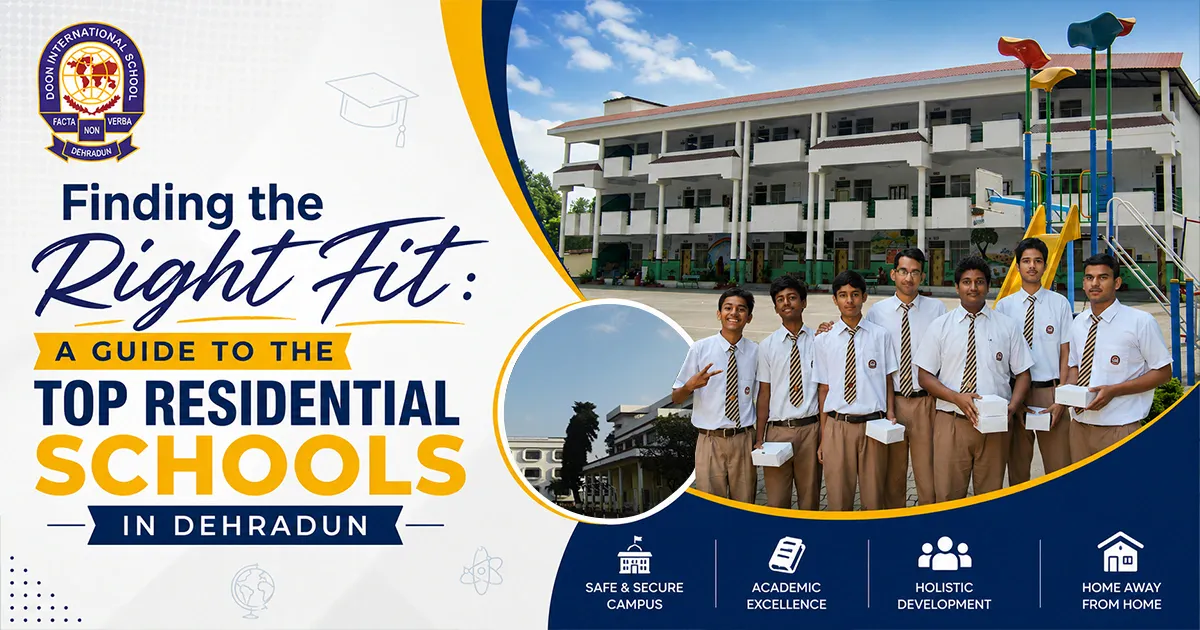
Are you struggling to separate actual campus reality from polished website brochures while searching for a school in Uttarakhand? Every year, thousands of parents look toward the Doon Valley to find a structured environment for their children. The sheer volume of choices can make the selection process feel overwhelming. Dehradun houses dozens of boarding institutions, each offering different academic boards, sports facilities, and living arrangements.
Choosing between these options requires looking past grand architecture. A parent must evaluate the actual daily schedule, the quality of pastoral care, and the financial transparency of the institution. This guide breaks down how leading institutions like Doon International School operate, what you can expect regarding costs, and how to identify a genuine residential learning environment.
The reason why Dehradun became an important center for the boarding schools in the early 1900s is climatic conditions. The town is surrounded by two hills, which make the climate consistent throughout the year and allow outdoor activities and the most practical learning environment.
Today, the Top Residential Schools in Dehradun stand out because they operate on a much larger physical scale than typical city schools. Most campuses occupy thirty or forty acres of land. This gives them enough room to house faculty quarters, medical units, and several playing fields inside a single guarded boundary. Having this much open space allows students to move freely between their classrooms and sports training without wasting hours stuck in urban traffic.
School bills are rarely straightforward. Parents searching for the top residential schools in Dehradun with Fee Structure lists often run into hidden costs split across different categories.
The final bill depends on the history of the property. Legacy institutions demand anywhere from ₹8,00,000 to ₹15,00,000 annually. That high cost funds massive old estates, international student trips, and horse stables.
Standard campuses run on a different budget. Most top CBSE residential schools, including Doon International School, set fees between ₹4,00,000 and ₹7,50,000 each year. This money covers competitive exam coaching, NCERT books, swimming pools, and sports fields. Government setups drop below ₹2,50,000 by sticking to basic metal bunk beds and state board syllabi.
Watch out for the extra charges. Top residential Schools in Dehradun with Hostel blocks always bill separately for uniforms, textbooks, and weekend trips.
A genuine residential learning environment is not just a dormitory attached to a standard school building. It is a structured system where learning continues long after the final academic bell rings at 2 PM. When assessing campuses, you need to examine how the hours between dusk and dawn are managed.
High-quality boarding schools integrate evening study hours into their daily timetable. Because a significant portion of the teaching faculty lives on the campus grounds, students can access subject experts for remedial help without hiring external private tutors. Furthermore, a proper residential setup ensures that sports are completely non-negotiable. Every afternoon, the dormitories clear out completely, forcing students to participate in field sports, track events, or swimming under the guidance of professional coaches.
Most parents searching for the best residential schools in Dehradun eventually face a choice regarding academic affiliation. While international boards like the IB or Cambridge have entered the region, top CBSE residential schools like Doon International School remain the preferred choice for families targeting Indian competitive exams.
The CBSE syllabus is a direct reflection of the examination process of engineering, medical, and central university entrance exams in India. These schools in Dehradun follow the standard NCERT books alongside testing on an even more serious evening schedule. Boarding schools have an edge over day schools because the study atmosphere is devoid of any technological interruptions.
You need to look at the exact hour-by-hour breakdown of a hostel day to understand what your child will actually experience. The schedule leaves no empty blocks of time, which prevents behavioral issues and keeps students from falling into lazy habits.
This schedule operates for six days of the week with no exceptions at all. Sundays are somewhat more relaxed as they provide boarders with the opportunity to watch a movie in the auditorium, make calls to their parents, or hang out in photography, debate, or music clubs.
You cannot build a strong student if the kitchen functions like a cheap commercial catering setup. Leading institutions treat meal blocks as an essential part of their physical health infrastructure.
A professional dietitian writes the monthly menus, mapping out clear calorie targets for growing teenagers. The kitchen drops deep-fried snacks, processed instant noodles, and carbonated sodas completely out of the supply chain. Instead, the kitchen staff serves four hot meals a day filled with fresh vegetables, dairy products, lentils, and whole grains. The physical cooking space undergoes regular hygiene audits, and the water treatment loops pass through commercial filtration units that get checked monthly for biological purity.
Medical backup works on the same rigorous blueprint. When a boarder shows signs of a cold or fever, house parents transfer them to the isolated campus infirmary immediately. This prevents infections from traveling down the dormitory hallway. Resident nursing teams run these wards around the clock, keeping digital charts of every child’s weight, vaccination dates, and seasonal allergies. If an illness requires advanced diagnostic tools late at night, the school keeps a dedicated vehicle ready to drive straight to multi-specialty hospitals in Dehradun City while the administrative staff calls the parents with direct updates.
Urban day schools usually reserve the activities of music, theater, and debate for just a few hurried weeks prior to their annual event. Residential campuses, however, have these built into their daily routine. Students practice such skills every day as a part of their schedule.
These activities are organized on campus through the House System, where people are split into competing groups named after rivers, mountain chains, or prominent personalities from around the country. These houses compete against each other every weekend through debates, chess, choir, and science contests in order to score points in an attempt to win the yearly championship cup. This helps develop strong bonds between peers and how to function within a competitive group.
These weekend competitions teach students how to take charge. Boarding prefects do real work every day to keep the campus running smoothly. They do night headcounts in the dorms, keep the dining hall quiet during meals, set up afternoon sports teams, and talk to younger students when they miss home. This daily work teaches teenagers how to guide others and handle big responsibilities before they leave for college.
Do not rely solely on digital marketing materials when making your final choice. If you are planning to shortlist institutions, use this checklist to verify the operational reality of the campus:
Finding the right boarding school is about looking past flashy websites and finding a safe, structured home for your child. Dehradun offers many choices, but the best schools focus on clear daily routines, strong support from live-in teachers, and honest fee systems. Doon International School combines reliable CBSE academics with active sports and proper personal care to help students grow into responsible individuals. Take your time to check the actual campus facilities, talk to the residential team, and choose an environment where your child can feel safe and succeed.
The Doon School, located in Dehradun, consistently ranks as the number one all-boys boarding school in India across major national educational surveys. For co-educational residential education, institutions like Rishi Valley School in Andhra Pradesh frequently hold the top spot.
The designation of the best residential school depends entirely on your child’s specific needs. For a traditional, heritage-driven all-boys environment, The Doon School and Welham Boys School are highly preferred. If you are looking for co-educational setups with strong modern infrastructure, excellent academic tracking, and balanced sports programs, Doon International School ranks among the top choices in the state.